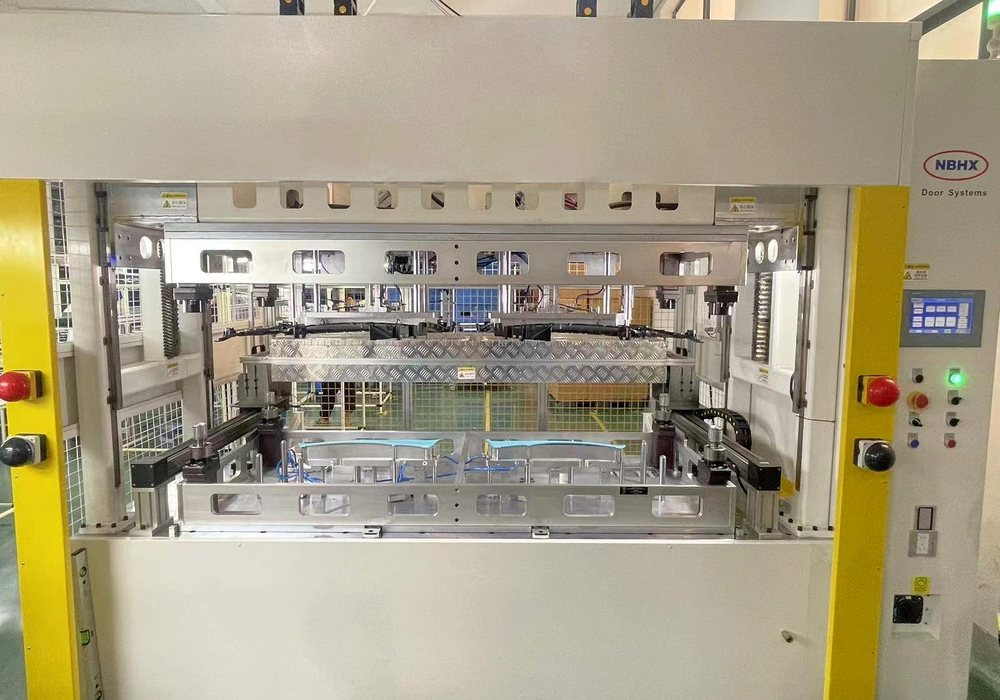
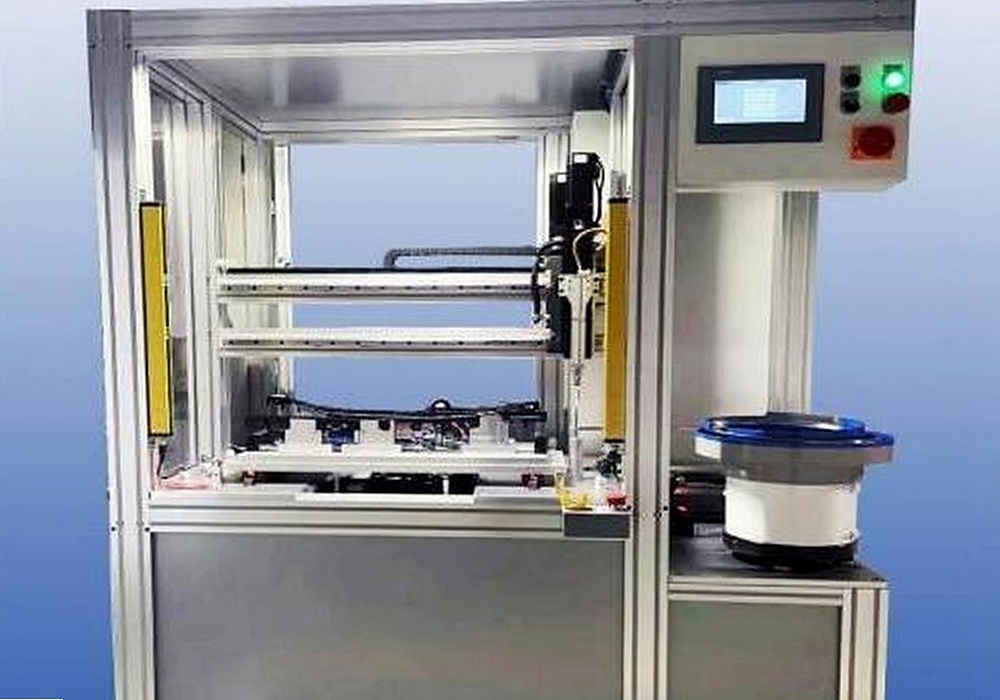
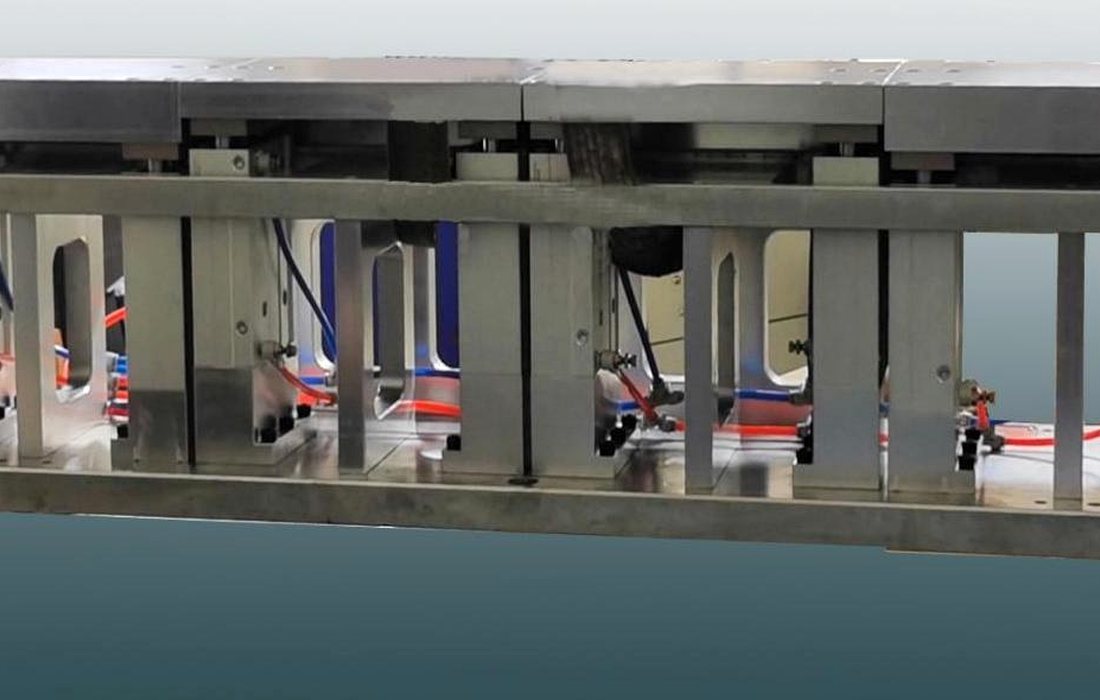
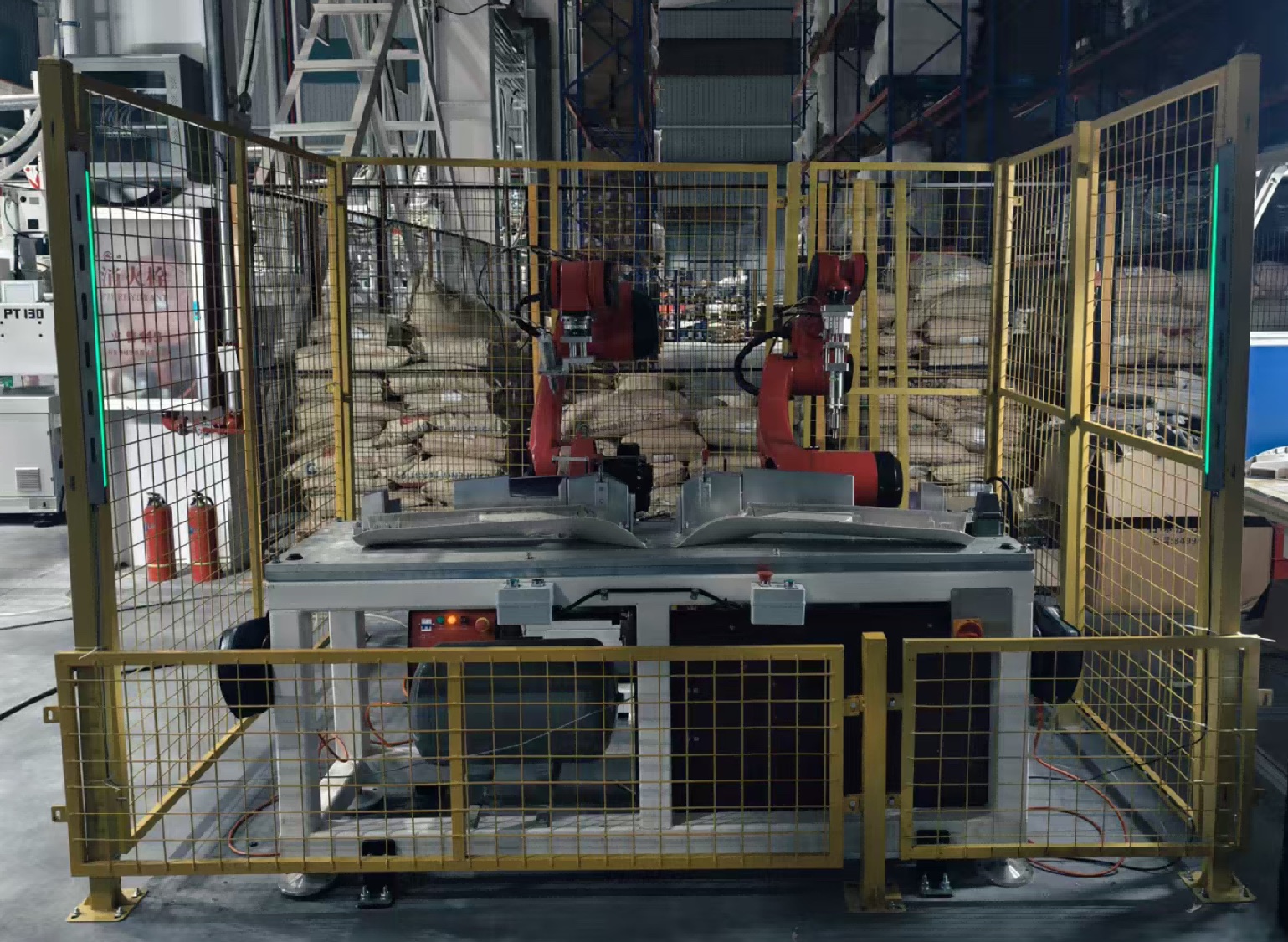
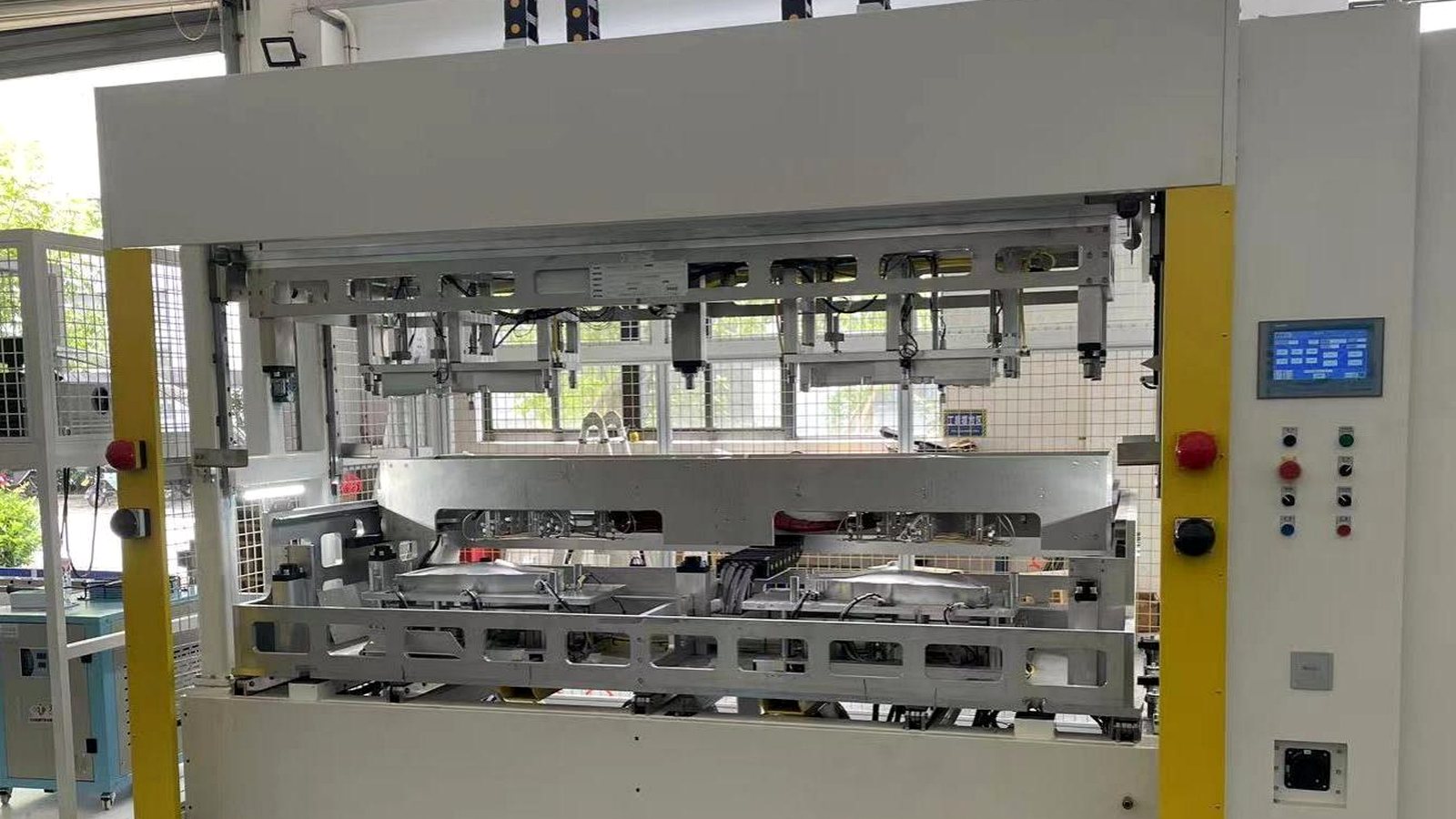
NBKEM hot riveting automation equipment

NBKEM AUTOMATION EQUIPMENT

Automation Equipment and Fixtures for Automotive Interior Projects

Founded in 2008, NBKEM provides engineering evaluation, equipment concepts, fixture design, assembly, commissioning and project delivery for automotive interior automation and mold-related applications.

2008
Founded
4+
Core equipment fields
0.1mm
Mold-clamping tolerance

Company Profile

Project-based engineering, not only single-machine delivery

NBKEM focuses on customer-specific automation projects for automotive interiors, mold-related equipment and non-standard production scenarios. Our work covers solution evaluation, mechanical design, electrical control, fixtures, assembly, commissioning and on-site implementation.

Engineering Focus

We define process risks before confirming equipment concepts

For automotive interior parts, stable production depends on positioning, heating, pressure, changeover, poka-yoke logic and maintainability. Clarifying these points early makes the proposal, timeline and acceptance criteria more practical.

01

Cycle Time and Consistency

We evaluate manual actions, waiting time, thermal stability and process sequence, then translate cycle-time targets into equipment actions and fixture strategy.
02

Positioning and Surface Protection

Interior parts often have visible surfaces. Fixtures must protect appearance while maintaining reliable datum control and ergonomic loading.

03

Flexible Changeover

For multi-platform and multi-version programs, common parts, quick-change modules, mold trolleys and recipe control help reduce downtime.

04

Maintainability and Replication

Clear structure, pneumatic layout, electrical layout and wear-part access help customers troubleshoot faster and replicate solutions for future projects.

Core Capabilities

From product process to equipment implementation

We integrate mechanical structures, electrical control, pneumatic execution, heating modules and fixture systems around hot riveting, wrapping, assembly, inspection and custom tooling.

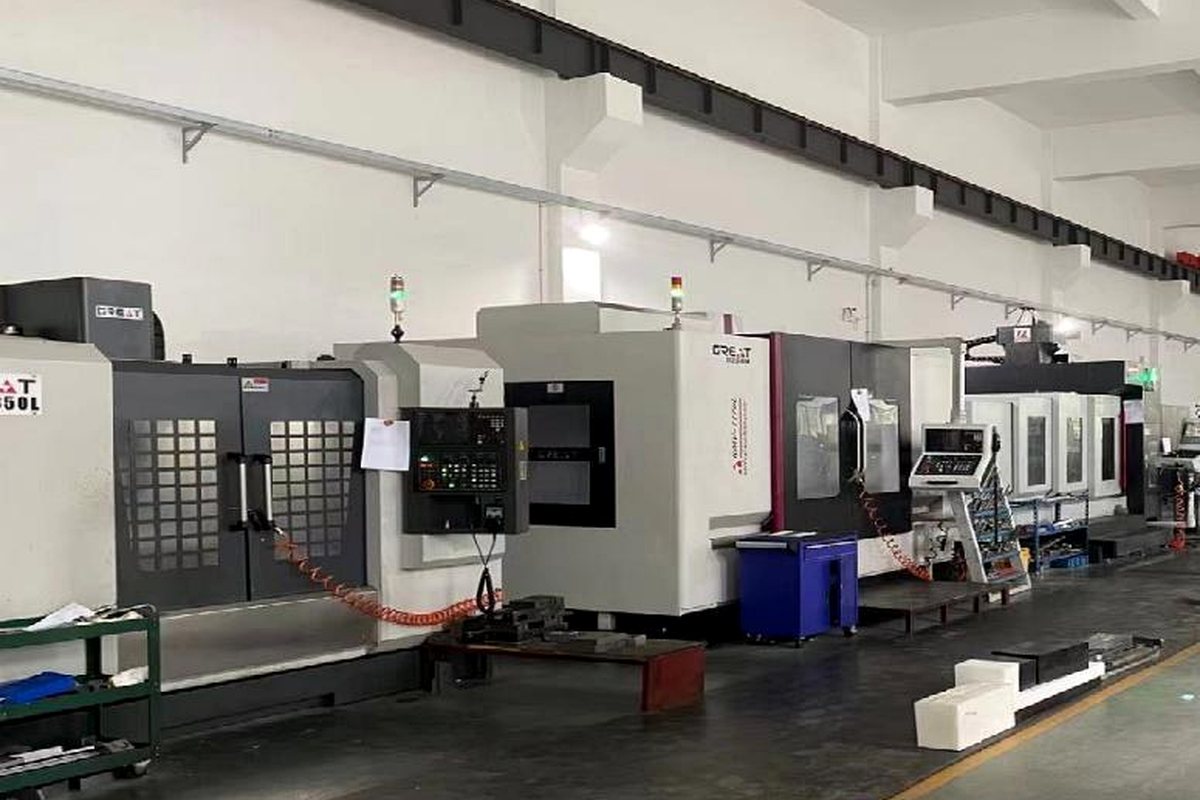
NBKEM workshop and equipment commissioning area
Workshop equipment and commissioning environment
01

Custom Automation Development

Customized mechanical, electrical, pneumatic and safety concepts based on product structure, cycle time, datum strategy and quality checkpoints.

02

Automotive Interior Process Equipment

Hot riveting, leather wrapping, buckle assembly, wood veneer/aluminum bonding fixtures and related tooling for automotive interior parts.

03

Fixtures and Quick Changeover

Welding fixtures, changeover trolleys, CNC fixtures and quick-replacement universal parts designed for easier maintenance and faster changeover.

04

On-site Commissioning and Optimization

Support for sample validation, equipment rhythm, production stability and operator workflow improvement during project implementation.

Solution Matrix

Match equipment, fixtures and validation methods to project needs

Customers can use the following categories to frame a project before sending samples, drawings, cycle-time targets and site restrictions for engineering review.

New Program Launch

For new vehicle programs, new parts or new process development.

  • Review process route and action sequence
  • Evaluate datum, clamping and poka-yoke points
  • Provide equipment concept and key configuration

Manual Process Automation

For upgrading manual assembly, hot riveting, wrapping or inspection processes.

  • Analyze unstable points in manual operation
  • Improve consistency with fixtures, sensors and control logic
  • Balance operator workflow and maintenance cost

Equipment Replication and Modification

For capacity expansion, product changeover or improvement of existing production experience.

  • Review current machine pain points and downtime causes
  • Optimize common tooling, pneumatic/electrical layout and HMI
  • Support standardization for future equipment replication

Technical Review

Engineering conditions to clarify before quotation

Even for the same hot riveting, wrapping or assembly category, different part structures and plant standards can lead to different equipment concepts. This checklist helps customers prepare useful input.

Product and Materials

Part material, visible surfaces, allowable force areas, thermal deformation risk and material behavior of leather, plastic, wood veneer or aluminum parts.

Process Window

Temperature, pressure, time, displacement, cooling, holding and glue-curing requirements should be reviewed before finalizing machine actions.

Positioning Datum

Main datum, secondary location, clamping direction, loading path and error-proofing design affect repeatability and operator variation.

Cycle Time and Capacity

Target takt time, shift plan, changeover frequency and loading method determine whether a single-station, multi-station or semi-automatic concept is suitable.

Quality Control

Define required checks such as presence, pressure, temperature, weld status, missing parts, wrong parts, appearance protection and alarms.

Site Conditions

Confirm power, air supply, footprint, logistics direction, safety standards, customer-specified brands and maintenance capability.

Leading Products

Main Equipment and Fixtures

Customizable automation equipment for hot riveting, wrapping, assembly, inspection and fixture holding of automotive interior parts.
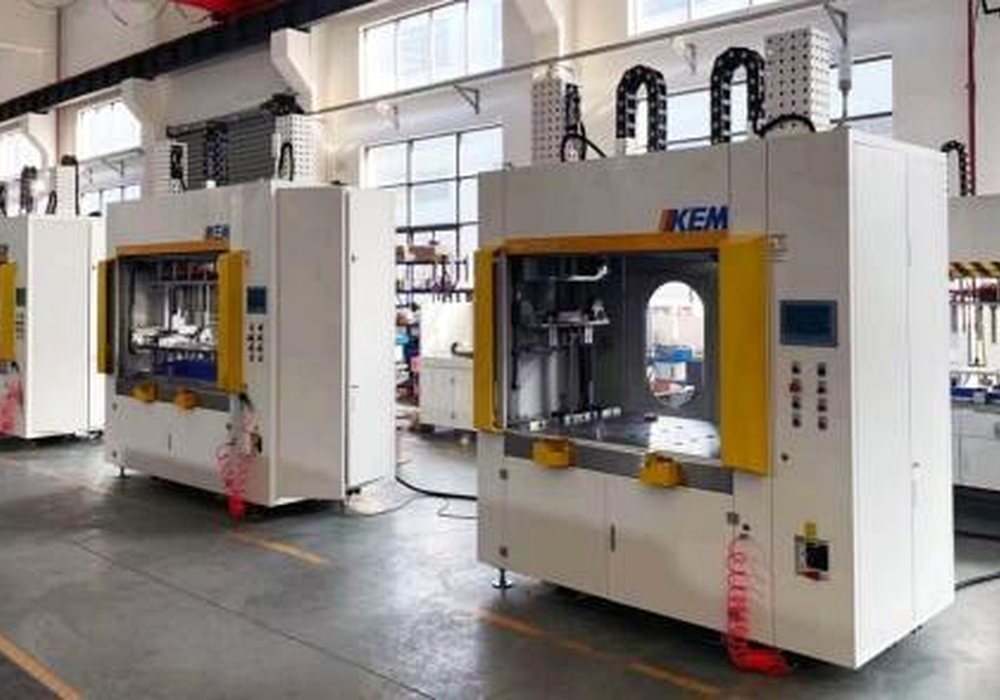
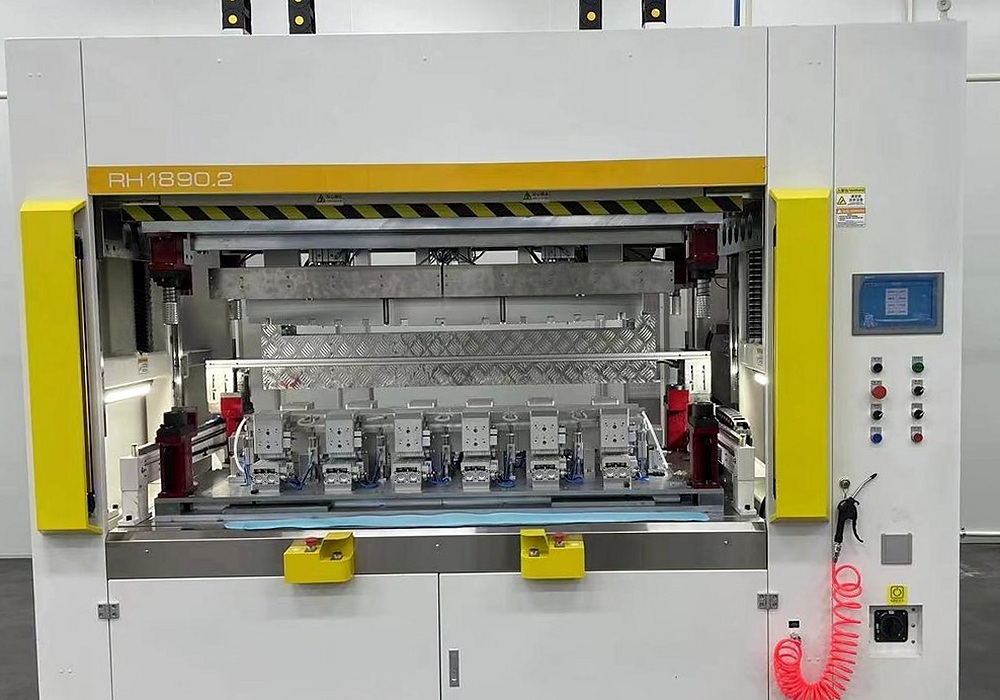
RH series hot riveting welding equipment

RH1890 / RH1390

Hot Riveting Welding Equipment

Designed for multi-point hot riveting and pressing of automotive interior parts, with dual-servo lifting, automatic leveling, PLC control and fixture changeover.

Automatic wrapping equipment and fixtures

Wrapping

Automatic Wrapping Equipment and Fixtures

Supports plastic and leather loading, alignment, glue heating and folded-edge wrapping to improve consistency and process efficiency.

Automatic buckle assembly equipment

Assembly

Automatic Buckle Assembly and Bonding Fixtures

For automatic buckle installation, wood veneer/aluminum bonding and press-fit applications requiring positioning, force control and repeatability.

CNC and welding fixtures

Fixture

CNC Fixtures and Welding Fixtures

Positioning, welding, mold-change handling and flexible welding head structures designed for rigidity, serviceability and project changeover.

RH Welder Models

RH1390B/C, RH1590B/C and RH1890B Model and Dimension References

The added model and dimension material helps customers review machine footprint, weldable product size, cycle time, temperature-control capacity and upper fixture load before detailed engineering discussion.

Dual-servo lifting Automatic left/right leveling Welding-point temperature monitoring Quick-change fixture structure
RH series hot riveting welding equipment in workshop
RH series hot riveting equipment in workshop and commissioning environment

RH1390B/C · RH1590B/C

For medium-sized interior hot riveting applications

Approx. max weldable product size is 950 x 420 mm, fastest welding C/T is about 32 s, machine dimensions are 2300 x 1360 x 2300 mm, and max upper fixture load is 450 kg.

RH1890B

For larger products and higher fixture load

Approx. max weldable product size is 1600 x 420 mm, fastest welding C/T is about 35 s, machine dimensions are 2800 x 1350 x 2340 mm, and max upper fixture load is 600 kg.

Quick Change

Upper and lower fixture locking for changeover

B/C model references include upper fixture locking, lower fixture locking and rotary press-lock details for evaluating fixture size and changeover efficiency.

RH Series

Hot Riveting Equipment Parameters and Model Selection Reference

The following parameters are consolidated from the model and dimension material. They can support early model selection, layout review and project discussion; final configuration should follow the part structure and technical agreement.

Parameter RH1390B/C (1590B/C) RH1890B
Max weldable product size Approx. 950 x 420 mm Approx. 1600 x 420 mm
Fastest welding C/T Approx. 32 s Approx. 35 s
Machine dimensions 2300 x 1360 x 2300 mm 2800 x 1350 x 2340 mm
Effective table size 1300 x 900 mm 1800 x 900 mm
Machine weight Approx. 3.8 t Approx. 4.2 t
Max temperature-control points 64-96 points 64-108 points
Max power per point 260 W 260 W
Power input AC380V 50Hz 35kW, three-phase five-wire for China/Europe
AC480V 60Hz 35kW, three-phase four-wire for North America
AC380V 50Hz 38kW, three-phase five-wire for China/Europe
AC480V 60Hz 38kW, three-phase four-wire for North America
Air supply 0.6-1 MPa, 100 L/min 0.6-1 MPa, 100 L/min
Max upper-platform moving speed 160 mm/s 160 mm/s
Max upper fixture load 450 kg 600 kg
Welding speed 0.1-1 mm/s 0.1-1 mm/s
Servo and control system Siemens 2.5-3kW x 2; Siemens S1200 Siemens 3.5kW x 2; Siemens S1200

Fixture Interface

Quick-change Fixture, Lock-hole and Heating/Cooling References

These drawings support early review of upper/lower template interfaces, locking structures, hole patterns and hot-riveting heating/cooling windows. They are shown as engineering communication references; detailed dimensions should be confirmed with project drawings.

RH1390B and RH1590B quick-change fixture structure
RH1390B / RH1590B quick-change structure
RH1390C and RH1590C quick-change fixture structure
RH1390C / RH1590C quick-change structure
Upper fixture locking device dimension reference
Upper fixture locking device reference
RH1890 lower template lock-hole reference
RH1390 upper template lock-hole reference
RH1390 lower template lock-hole reference
Hot riveting fixture heating curve
Hot riveting fixture cooling curve

Project Delivery

A clear delivery path for faster project evaluation

1

Requirement and Sample Review

Clarify part structure, process actions, positioning method, cycle-time target, quality checkpoints and site limitations.

2

Concept Design and Review

Provide equipment layout, fixture concept, action logic, key component configuration and safety recommendations.

3

Manufacturing, Assembly and Debugging

Complete machining, assembly, electrical control, pneumatic setup, heating modules and software commissioning.

4

On-site Implementation

Support installation, trial production, operator training and subsequent process optimization at customer sites.

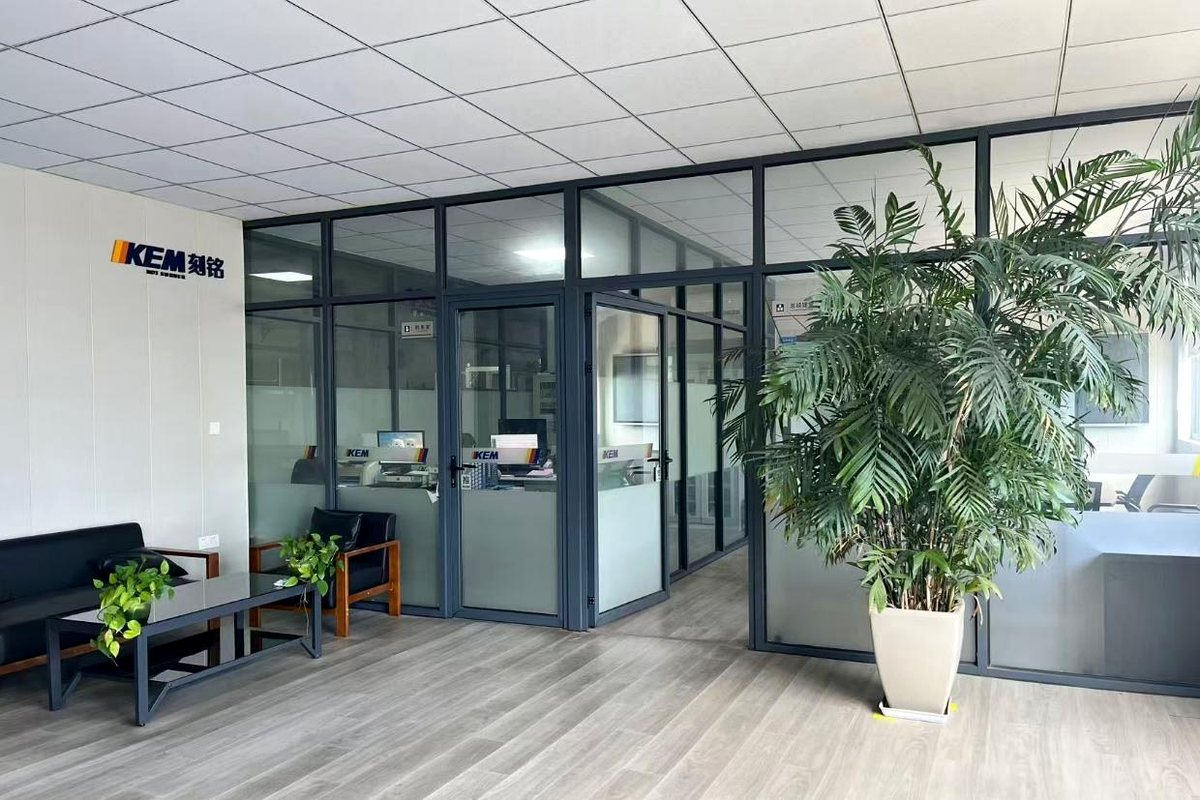
NBKEM project communication and review environment
Project communication, concept review and internal collaboration

Quality & Acceptance

Acceptance criteria should be defined early

A common risk in custom automation projects is redefining acceptance after equipment manufacturing. We recommend defining acceptance dimensions during the concept stage so engineering, purchasing, production and quality teams share the same target.

Process Validation

Validate samples, key parameter windows, fixture repeatability, sensor logic and abnormal-condition handling.

Equipment Acceptance

Recommended checks include dry run, continuous trial production, cycle time, appearance protection, safety interlock, alarms and wear-part list.

Delivery Documents

Operation instructions, electrical/pneumatic diagrams, maintenance suggestions, spare-parts list and training points can be prepared as required.

Project References

Historical program codes and adaptation experience

The following vehicle platforms or program codes are listed to illustrate NBKEM's adaptation experience across different automotive interior products, process structures and changeover scenarios. Names are used only for project background identification.

V214 / V216 VW380 / VW316 / VW416 / VW413 / VW378 / VW491 / VW426 Model 3 / Model Y Audi C7 / CSVU / B10 BMW G38 / U06 / U12 GM U540 / L233 / L234 BYD HTEP / SR Li Auto W02 / W04 SERES F1L Leapmotor B11
NBKEM equipment and fixture project site
Hot riveting and assembly equipment project site

Before Inquiry

Prepare these details for a faster and clearer proposal

You can contact us even if the documentation is incomplete, but clearer input helps narrow down equipment concept, timeline and quotation scope.

What information should be provided?

Product photos or 3D/2D drawings, sample status, process description, cycle-time target, quality requirements, site space and customer-specified component brands.

Can we start with samples only?

Yes. We can provide an initial review, but detailed concept work usually requires key dimensions, datum strategy, material characteristics and appearance-protection requirements.

Can equipment follow customer-specified component brands?

PLC, cylinders, sensors, heating modules and safety components can be discussed according to customer plant standards and confirmed in the technical agreement.

How to judge whether a process is suitable for automation?

We usually evaluate unstable manual actions, cycle-time bottlenecks, rework cost, product lifecycle, changeover frequency and expected investment return.

Contact NBKEM

Send us your project requirements

Please leave your contact information and project direction. Product type, program platform, sample status, cycle-time target and equipment space limits are especially useful for engineering communication.

Ningbo Keming Automation Equipment Co., Ltd. Address: Building 11, Hui Chuan Road, Xizhou Enterprise Cluster Area, Xiangshan, Ningbo, Zhejiang, China 315722 Tel: +86-574-65832269 / 65873366 Fax: +86-574-65873566 Email: nbkem@126.com Website: www.nbkem.com
Call NBKEM

Open email draft